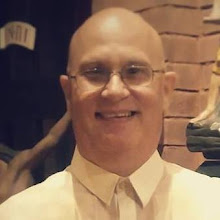
I envisioned this blog as something in between. There is room, I thought, for someone to review and comment upon classical music concerts and the occasional recording from an informed listener's perspective. More than "I liked" or "I didn't like" but less than the technical reviews who excoriate a performance where the "second bassoon misses the quiet back beats that are essential to the architecture..." and so on.
But I noticed that in my recent writing, I was starting to lean towards the latter... and not being a trained musician, was failing miserably.
Thus I am going to head back to what I think I do best, comment on what I heard but from the informed listener's aspect. I know a lot about music, I know what I like. I can tell good from bad, committed from apathetic and when a performer or ensemble communicates their message. That is what made "Puggingham Palace" and now "Pictures on Silence" what it is... whatever that is. It made it fun for me, and being selfish, that is what I am going to do.
Back to basics, and if lean towards the extremes as I mentioned above... call me on it.
Saturday, May 02, 2015


Wednesday, February 25, 2015
A Concord Essay
I love the term “bucket list” and
think everyone should have one. For the un-initiated, the term comes
from a movie where two terminally ill men go off on an adventure to
do things they always wanted to do before they euphemistically “kick
the bucket”. One of life's greatest pleasures is to cross off
something on one's list.
This past Saturday February 21st, I got
to do just that. I heard a live, complete performance of a work on my
music “bucket list”, the Piano Sonata No. 2 (Concord, Mass.,
1840-1860) by Charles Ives. In St Joseph, Missouri of all places,
performed by the remarkable, über-talented and shall we say brave
pianist Robert Pherigo. Assisting in this insane genius work was Rico
McNeela in the tiny, but often omitted viola line in the first
movement and Lyra Pherigo in the more important but also
sometimes omitted flute part in the Thoreau movement.
As was typical of the feisty and
innovative composer, Ives broke most of the piano sonata rules. The
sonata is programmatic to a point, something rather unusual for a
piano sonata, being a musical portrait of transcendentalist authors
who lived in Concord, Massachusetts, around 1840-1860: Ralph Waldo
Emerson, Nathaniel Hawthorne, the Alcott's Louisa May and her father
Bronson, and Henry David Thoreau. Most classical sonatas were in
three movements, but Ives included four, stretching the work to
almost symphonic stature. Few, if any, piano sonatas have parts for
viola and flute scattered about either. Early material exists from
around 1904 and it seems the work was conceived as a piano concerto.
Work on the solo sonata started in earnest around 1910-11 and was
mostly finished around 1915. Ives tended to fiddle with his music off
and on thus the work was revised in 1947, the edition that seems to
be played the most.
Like icing on a tasty cake was the
informative pre-concert talk by author and composer Kyle Gann, one of
the foremost authorities on Charles Ives, the Concord Sonata and Vice
President of the Charles Ives society. Gann focused on the work's
background and the personages that inspired it while highlighting the
recurring themes and motives that tie the sprawling work into a quite
logical and organic whole.
More than a recital or concert, this
was an old fashioned “happening” for those who remember what that
meant.
The performance? I make no bones that I
am nowhere near qualified to judge, just looking at the score gives
me a headache. I found it technically excellent to my ears, having
heard the work many times in recordings and Robert negotiated the
work from memory without a visible sweat or concern. A Hamelin,
Fitzpatrick, Denk or Kalish might bring more polish, technical
brilliance and more experience with the complex score (Hamelin's
“Alcotts” will bring goose-bumps, but this one was not far
behind) but Pherigo brought the work and Concord, Mass. to life for
the appreciative audience, many of whom I am sure, like me, had never
had the opportunity to hear it live. Even Gann said it had been a
while for him. Certainly far far far and did I say far from a
slam-bang run through, Robert found the humor, the lyricism, the
tenderness, nobility and humanity in this complex score. On that
damp, winter night in St Joseph Robert brought the work to life, let
us glimpse the world of the denizens of Concord and communicated Ives
own commentary on them and on humanity itself.
Thursday, January 29, 2015
Kansas City Symphony: Old and New
The Kansas City Symphony concerts for
the weekend of January 16-18 likely attracted two different types of
listeners; those who never tire of hearing the standard repertoire
again and again and, quite oppositely, those looking to hear new
works fresh from the composer's pen. A new concerto by composer,
conductor, pianist, jazz and pop artist Andre Previn just premiered
last November was sandwiched in between two giants of the orchestra
repertoire, the Mozart Symphony no. 35 “Haffner” and Brahms'
Symphony No. 1. Michael Stern, music director conducted, with Jaime
Laredo, Violin and Sharon Robinson, Cello as solos in the Previn.
The Cincinnati Symphony plus a
consortium of orchestras, including the Kansas City Symphony,
commissioned Previn to write the Double Concerto for Violin, Cello
and Orchestra for Laredo and Robinson. Orchestras in Austin, Detroit,
Los Angeles, Canada and Europe are scheduled to perform the work over
the next few months.
The Double Concerto, clocking a compact
20 minutes is certainly bright, colorful (yet fairly conventionally
scored) with little, if any, qualities that would offend the most
conservative of listeners. Yet immediately afterward it was
difficult, if not impossible, to really remember anything about the
work.
The first movement “Quasi Allegretto”
immediately introduces the violin and cello echoing the Brahms Double
Concerto. There the comparison ends. Glowing, busy and certainly
virtuosic, the movement lacks organization and seems to move from one
episode and mood to another. Laredo and Robinson, long time
collaborators and spouses, dig in to the busy music, keeping their
lines and glowing tones above all the fray.
Part bluesy nocturne, part-heart-on
sleeve romantic fantasy, the second movement marked “slow” has
more emotional gravitas and, due to the slower tempo, seems to be
more organized. Chains of lovely melodies abound, major key
statements and swelling dynamics morph into minor key angst... yet
again the movement leaves little lasting impression. The final
movement, “Presto” is a fun, skittish romp ending in big honking
C major chords for all assembled. The prestige and orchestras behind
this work will ensure that many will hear it but to me the Double
Concerto is “gone in 60 seconds”... here one second, gone the
next.
Mozart's “Haffner” Symphony No. 35
in D, K.385 opened the program. Stern and the symphony reminded the
audience that the work began as a serenade (not to be confused with
the Serenade also known as “Haffner” in the same key, K.250) with
a sprightly and spirited performance. Mozart asked that the first
movement be “played with fire” and the last “as fast as
possible; Stern and his forces certainly obeyed Mozart's command.
Stern's graceful but not fussy “Andante” 2nd movement
contrasted nicely with the energetic 1st, 3rd
and 4th movements. Mozart added flutes and clarinets to
the symphony's orchestration giving it a more mellow yet full
texture. This touch benefited the always excellent KCS woodwinds,
allowing them to contribute to an appropriately propulsive opener.
When I was introduced to the Brahms
Symphony No. 1 in c op 68. my classical music mentor Herbert Glass
told me that the work needs to start off “like a force of nature”
or else it is a failure. Dr. Glass was a geologist by profession so
he knew much about forces of nature, of course. And he is right and
so was Stern and the KCS in their performance. Right from the start
this was a powerful and forward performance. Not a glacier force but
one like a flowing river, relentless but with control.
I am known to readers and friends as
not a big fan of Brahms. Perhaps I have been exposed to too much
glacier-like performances. Brahms had to be big, heavy, bulky and
sometimes sweet, like a good German dinner. Stern has always gotten
Johannes up from the table and out for a brisk jog in the woods, all
to great benefit. Trust me, there is still great majesty and
throughout, the final pages of the first movement, the opening of the
finale, and the climatic pages of the “allegretto” 3rd
movement, are just a few. Stern also is keen to note the change in
mood and temperature the middle two movements bring to the work. He
does not allow them to wallow but provides just enough contrast and
release of tension to make the final movement even more persuasive.
Special mention must be made to the
excellent brass performances in this work. Not all that long ago, the
anticipation of a prolonged horn or trumpet solo caused great anxiety
among the regulars in the hall. Not now. The horns, introducing the
alphorn inspired theme, emerged glowing and golden from the low
strings and tympani, followed by the dulcet flute. A minor bobble of
the trumpet and trombone chorale there after marred little, the whole
episode was breathtaking. The chorale theme, an homage to Beethoven,
demonstrated the excellent sound of Helzberg Hall, one could hear the
darker husk of the violas, bringing out a texture not often captured
on a recording. Stern milked the drama from the movement's final
pages, not a headlong dash but an unleashing of the once bottled up
force of nature.
Tuesday, December 09, 2014
Best CDs of 2014... Number 14
What a dolt I am! I forgot one. Not until I was rummaging around in my CDs (after HRH Olive the Pug knocked a few over) did I remember this recording that I planned to add to my list. I can't very well knock one off the list after publishing it, so I will just do this supplement and add #14 to the list:
Darius Milhaud The Oresteia of Aeschylus: Agamemnon, Les choëphores, Les euménides
University of Michigan Percussion Ensemble, University of Michigan Symphony Orchestra, University of Michigan Choral Union, Kenneth Kiesler, Conductor
Naxos 660349 3 discs
A long time ago, a strange LP of a strange sounding work "Les choëphores" caught my eye. Even though conducted by the New York Philharmonic and Leonard Bernstein, it was only available as a "Columbia Special Products" LP and thus really hard to get. My local record store tried and was told it did not exist. It finally made an appearance on CD a few years ago and I picked up a copy, but it soon disappeared from the catalog. I didn't know about the Markevitch version that was on DG occasionally. My curiosity was only partly satisfied, what about the rest of the trilogy? All the years of not being able to get it made me so damn curious about it.. you know what it is like when you can't have something.... it makes it all the more intriguing.
Finally, here it is in all its. Strange, percussive, fascinating, dramatic, violent and in-your-face glory. Great sound, great performances (the Markevitch "Les chöephores" is better than the Bernstein and in some ways better than this performance, if you want to explore them) and great fun. But good grief, NO TEXTS. What a shame, but still a landmark recording.
I should be shot for forgetting this!
Darius Milhaud The Oresteia of Aeschylus: Agamemnon, Les choëphores, Les euménides
University of Michigan Percussion Ensemble, University of Michigan Symphony Orchestra, University of Michigan Choral Union, Kenneth Kiesler, Conductor
Naxos 660349 3 discs
A long time ago, a strange LP of a strange sounding work "Les choëphores" caught my eye. Even though conducted by the New York Philharmonic and Leonard Bernstein, it was only available as a "Columbia Special Products" LP and thus really hard to get. My local record store tried and was told it did not exist. It finally made an appearance on CD a few years ago and I picked up a copy, but it soon disappeared from the catalog. I didn't know about the Markevitch version that was on DG occasionally. My curiosity was only partly satisfied, what about the rest of the trilogy? All the years of not being able to get it made me so damn curious about it.. you know what it is like when you can't have something.... it makes it all the more intriguing.
Finally, here it is in all its. Strange, percussive, fascinating, dramatic, violent and in-your-face glory. Great sound, great performances (the Markevitch "Les chöephores" is better than the Bernstein and in some ways better than this performance, if you want to explore them) and great fun. But good grief, NO TEXTS. What a shame, but still a landmark recording.
I should be shot for forgetting this!
Sunday, December 07, 2014
Baker's Dozen Best Recordings 2014
Well! Here we are again. It is time to
reflect on the past 12 months, review the defining events of 2014,
recall celebrities who have passed away and of course the best of
this and that. I concentrate on the latter, leaving the obits and
news analysis to the talking heads of the TV. So yes, the best
recordings of 2014 list is here. As usual, since the list is mine, I
make the rules. These are not always brand new recordings, sometimes
they are ones I heard for the first time in 2014 or dusted off my
shelf. No pop or jazz, since that is not really my thing, and I am
sure I have missed some “blockbusters” because the artists or
repertoire were not of interest to me. No “Dude” or Sir Simon Le
Rat (sic) or other “big names” recording more Mahler or whatever
they are into now. You are more likely to find recordings of Havergal
Brian (none this year though) or Morton Feldman (one this time
around) than Bach, Beethoven or Brahms. So with all that, here are my
baker's dozen favorite recordings, as usual listed in no particular
order.
Britten: Works for String Orchestra
Camerata Nordica, Terje Tonnesen, Director
BIS 2060
Britten tuned 100 in 2013 and of course
big box releases were plentiful. With all the big guns firing, this
2013 release escaped me until this year. I have been slow to
appreciate all of Britten's works; the “War Requiem”, “Peter
Grimes” and “Sinfonia da Requiem” are givens, but much of his
work long has baffled or left me cold. But this charming, well
performed and enlightening disc opened the string orchestra works to
my enjoyment. There is nothing “simple” about the “Simple
Symphony”, the Bridge Variations is a masterpiece and Lachrymae is
simply beyond description. Get this disc.
Yevhen (Yeven or Evgeny) Stankovych
(Stankovich): Symphonies 1, 2 and 4 Theodore Kuchar, Ukraine National
Symphony Orchestra
Naxos 8555741
These are actually 1995 Marco Polo
recordings re-released on Naxos. I enjoy exploring the vast unknown
of 20th century Russian/Soviet Bloc music. A lot of junk was produced
(even by the big names) but there are many, many jewels buried in the
trash heap. Ukrainian Yevhen Stankovych (seemingly the preferred
spelling) is prolific yet lyrical, dramatic and listenable. Unlike
many, the ghost of Shostakovich and Prokofiev is not overwhelming,
but still always there. One of the jewels hidden in the pile.
Brahms and Schumann Piano Quintets
Joyce Yang, Piano/Alexander String Quartet
Foghorn Classics FCL2014
The talented Alexanders and brilliant
Joyce Yang take on two towers of 19th century chamber music, the
Brahms Piano Quintet in f Op 34 and the Schumann Piano Quintet in Eb
op 44. Frankly any recording that elicits a positive comment about
Brahms from me is worth noting. No stodgy, elegant (read dull and
technical) readings here, these are gutsy, lively, exciting and maybe
even a bit edgy performances. Excellent production, including concise
yet informative notes.
Bartók And Kodály Complete String
Quartets Alexander String Quartet
Foghorn Classics FCL2009 (3 discs)
While we have the excellent Alexanders
in front of us, mention must be made of this always intelligent,
intense, musical, satisfying and well recorded set. Add this to the
list of recordings that challenge and maybe surpass the classic
Julliard recording of the Bartók cycle. Combine the fine and less
well known Kodály quartets and you
have a special release indeed.
Troubadour Blue: Nils Bultmann Works
for Viola. Nils Bultmann, Hank Dutt violas, Parry Karp cello, Stephen
Kent, didjeridu.
Innova 851
Thanks to I Care if You Listen and my
fellow contributor Jarrett Goodchild, I had the notion to listen to
this disc of works by San Francisco based composer/violist Nils
Bultmann. Bultmann is one of the rare composers who can open your ear
while not assaulting it, his music is tonal but inventive, rhythmic
and visceral. The works on this recordings will both challenge and
please. One simply has to hear “From the Depths” an imaginative
and strikingly beautiful set of duos for viola and didjeridu and the
“10 Viola Duets” for 2 violas are as often amusing as they are
fascinating.
Columbia-Princeton Electronic Music
Center: Music by Babbit, Arel, Davidovsky, Luening, El-Dabh,
Ussachevsky.
Columbia/Sony 3268 (Available as an
ArchivMusic on demand CD)
I remember this recording, released in
1964, from my teen years as I explored classical music. I don't think
I ever owned a copy, but heard it at the library where probably most
of the copies ended up. But it, along with other trail blazing
recordings, led me to daydream about being an electronic music
composer, which of course did not come to pass. This disc was on the
cutting edge of the avant garde in the 60's, but now we giggle at the
almost absurd series of bleeps, buzzes, warbles and squeals that
comprise the works' electronic elements. The big names of the early
electronic era are here and the compositions are representative of
their time.... 50 years ago... seems like yesterday. Nostalgia for
the radicals out there.
American Masters: Violin Works by
Mason Bates, John Corigliano and Samuel Barber. Anne Akiko Meyers,
Violin, Leonard Slatkin London Symphony Orchestra
eOne 7791
Three works for violin and orchestra
from three American masters who share much more than is obvious.
Barber (Violin Concerto 1939) was a mentor to Corigliano (Lullaby
for Natalie 2010) who was Mason Bates' (Concerto for Violin “Archeopteryx” 2012) teacher. I reviewed this disc for I Care if You Listen in November and frankly I think I was too hard on the Bates
Concerto. Further listening reveals a finely crafted, tuneful work
that fits and compliments the other two works. The Barber is an utter
masterpiece so maybe the others pale in comparison, but in that case,
so do many others. Fine, fine recording. A keeper for sure.
Stanislaw Skrowaczewski: The
Complete Oehms Classics Recordings. Music of Bruckner Brahms,
Beethoven, Berlioz, Schumann, Skrowaczewski and others. Saarbrücken
Radio Symphony Orchestra, Bavarian Radio
Chorus, Saarbrücken Radio Philharmonic Orchestra, Oehms
Classics 90
The great Stanislaw Skrowaczweski
turned 90 in 2013 and Oehms released this wonderful set of his
recordings for them late last year. Complete Beethoven, Brahms, and
Bruckner and Schumann Symphonies plus some Bartok, Berlioz, the two
Chopin Piano Concerti and some of Skrowaczewski's own excellent
compositions. I first heard him when he was the Music Director at
Minnesota and always find his performances suave, exciting and
musical. My conducting god, I drove 4 hours one way to hear him do
Bruckner 8 and would do it again in a heartbeat. Lucky the
performance here is first rate so I can stay in tonight.
Organ Polychrome: The French School.
Jan Kraybill, Organ. Casavant Organ, Kauffman Center for the
Performing Arts, Kansas City, MO Reference Recordings RR133
Morton Feldman String Quartet #1, Three Pieces for String Quartet, Structures for String Quartet. Flux String Quartet Mode 269 3 discs and DVD
At a mere 90 minutes instead of the 6 hours required for String Quartet # 2, # 1 is a trifle. But what a trifle; serene, glowing, glacial, energetic, softly ringing.... one incredible sound after another. Feldman is an acquired taste, but like that of scotch, anchovies or whatever... it is worth it for those in the know. The recording perfectly captures all the subtle changes in dynamics and harmonics. The DVD allows you to hear the whole quartet without interruption. Three Pieces and Structures are also vintage Feldman and are much, much shorter. It is a cold, misty dark December evening as I write this... I think I will pull this disc out... it fits.
Miraculous Metamorphoses: Bartok, Miraculous Mandarin Suite, Prokofiev, Love for Three Oranges Suite, Hindemith, Symphonic Metamorphosis on Themes by Carl Maria von Weber. Kansas City Symphony, Michael Stern.
Reference Recordings RR132
Performances that can stand with the best of them and sonics that sound fabulous even on my computer speakers combine for another Reference Recordings/Kansas City Symphony “hit”. One also has to give the Kansas City Symphony, Reference Recordings and all involved great credit for daring to record major standard repertoire pieces that often have some very heady competition.
Shostakovich Symphony # 14 (1969)
Gal James, Soprano, Alexander Vinogradov Bass Vasily Petrenko Royal
Liverpool Philharmonic Naxos
8.573132
Overall, an excellent performance but I
still can not live without the Barshai led performances with
Vishnevskaya/Reshetin or with Simoni/Vaneev in the Cologne
recording. Barshai was there at the beginning and had the music in
his veins. The Curtin/Estes Ormandy is a sentimental favorite, with
some of the most impressively ghoulish cover art ever devised. I
thought the Liverpool strings were a bit weak and James less
impressive than Vinogradov, but other critics disagreed. Overall a
fine addition to the Shostakovich canon.
If the 14th was a fine recording, then the powerful 13th was perfection. Vinogradov is dark, brooding, frightening and frightened with deep voice that is still clarion clear. The chorus is not as idiomatic as a fine Russian ensemble, but is clear and present, well blended with the other forces. This is also one recording that does not let down after the long and dramatic first movement, the other four are equal in their drama and pathos. Great performance and a fitting end to a fine cycle. Petrenko is just 38 so he may yet have an even finer cycle in store some day.
Friday, October 10, 2014
Terrain of the Heart, Song Cycles of Mark Abel
“Terrain of the Heart”
Song Cycles of Mark Abel
Jamie Chamberlin, Soprano
Ariel Pisturino, Soprano
Victoria Kirsch, Piano
Delos 3438
Look around the rock music world of New
York City in the late 70's and you would likely run into a fellow
named Mark Abel. He might be leading a group he created, making a
record with another or maybe producing an album or two. Originally
from Connecticut, Abel had studied music in California before heading
back to the east coast. He returned to the Bay Area in 1983, not to
produce music but to work in news journalism, eventually becoming
Foreign Editor of the respected San Francisco Chronicle. Musically,
during his two decades in journalism, Abel moved away from rock and
pop and began to explore classical forms and concepts becoming
especially focused on solo vocal music. Thus Abel melds his
experience in classical, rock and song writing music into songs that
are sophisticated, accessible, original and tuneful.
An accomplished writer, Abel often
writes his own texts for his songs. “Terrain of the Heart”
showcases three of Abel's song cycles, two of which are settings of
his own text. “The Dark Eyed Chameleon” and “Rainbow Songs”
use his own poetry. “Five Poems of Rainer Maria Rilke” obviously
set poems by the Bohemian novelist-poet.
Musically, nothing in these three
cycles would be out of place in a contemporary musical. Frequently
tonally ambiguous, and contemporary in sound, they are nonetheless
well crafted, emotionally complex and engaging lyric songs in the
truest sense of the form.
At nearly a half hour, “ The Dark
Eyed Chameleon” (2007) is the most substantial and most emotionally
affecting of the three song cycles. The nearly half hour cycle tells
the tale of the composer's painful break up of a long term
relationship. Hints of past tragedy and loss, misunderstandings,
longing, realizing the inevitable (“underneath us the ground is
always shifting, unstable like our California”) and the final break
(The fatal blow is struck by telephone..) permeate the lyrics to the
five songs. Very theatrical in nature, “Chameleon” could be
envisioned as a one actor play, but Abel's accompanying music,
alternatively wistful, agonized and even confused, propels the story
forward as much as the lyrics. Soprano Jamie Chamberlin, along with
pianist Victoria Kirsch totally understand and are committed to the
work. Chamberlin negotiates the many chromatic leaps and rapid
changes of emotion and texture. Kirsch is a sensitive yet propulsive
accompanist and a full partner in telling the story.
For the “Five Poems of Rainer Maria
Rilke” (2004) Ariel Pisturino, soprano, takes over the vocal
duties. Pisturino is gifted with a big, but clear and slightly bright
voice that perfectly suits the darkly expressive poetry. Her's is a
voice tailor made for art song. Of the three cycles, “Five Poems”
is the most “classical” influenced, more adventurous and flexible
in tempi and dynamics, befitting the more hauntingly symbolic nature
of the lyrics. “In this town the last house stands” is shaded and
ultimately enigmatic, the vocal lines lyrical but unsettled at the
same time. The longest of the five songs, “All of you undisturbed
cities” is punctuated with relentless ostinati over which Pisturino
weaves the jagged melodic line, laced with impending doom. In the
remaining songs,“My life is not this steeply sloping hour”,“You
darkness, that I come from” and “I live my life in growing
orbits”, Abel's stark and expressionistic music works in tandem
with the often mysterious poetry to deliver a most satisfying yet
challenging musical experience. “Five Poems” is certainly a fine
addition to the song repertoire and worth repeated hearings in
recordings and in recitals or concerts.
Chamberlin returns with her lighter
voice (should I say less “operatic” and more “Broadway” voice
and start that whole argument??) in the final four “Rainbow Songs”.
More light hearted and fanciful than the other cycles, “Rainbow”
could be dismissed as fluff and nothing new but for the colorful and
atmospheric “La Sonnambula”, depicting a woman wandering through
desolate streets looking for her lover, but doomed to never find him.
“La Sonnambula” is a touch more sophisticated than many of the
other songs, growing in drama, dynamics and lyrical intensity from a
shadowy figure in the piano. To my ears, it is the single most
effective song on the disc.
Abel's music in each of the cycles is
highly chromatic and linear, the linearity and incessant forward
motion showing the formidable influences of the composer's rock music
roots. While appropriate to the lyrics, which, with the exception of
the Rilke songs, are also rock influenced and linear in nature, the
chromatic and declamatory sound world can lead to a numbing sameness
if one listens to the whole 73 minute CD in one sitting. Probably
best to get into this music by listening to one cycle at a time.
Delos' notes and bios are of their
usual high standard as is the stellar sound engineering. There is
frequently a lot going on in the songs, lyrically and musically, so
the close and somewhat dry sound works well to keep everything clear.
Mark Abel's website (www.markabelmusic.com) has perusal scores for
all the songs for those wanting to follow along.
Perhaps this music is more influenced
by Sondheim than Schubert, but that was not the composer's intention.
Put all that aside, and listen to some fine, easily approachable and
frequently satisfying songs.
Friday, June 06, 2014
Kansas City Symphony Verdi Requiem
The May 30 through June 1 performances
of the Verdi Requiem could be summarized as “redemptive”, not
just for the departed soul but for the Kansas City Symphony and
Chorus, led by Music Director Michael Stern. The symphony's last
performance of Verdi's 1874 masterpiece in May 2008 was problematic
to be kind; the main culprits being the chorus and the totally
unenthusiastic soloists. The performance was leaden, loud rather than
powerful and overall disappointing. This time around in the much
friendlier and spacious Helzberg Hall, a rejuvenated chorus, a
seasoned orchestra and more committed soloists combined for a
powerful, expressive performance.
The chorus has, in my experience, never
made a more subtly expressive entrance than that of the opening,
practically whispered “Requiem”. Clear, perfectly balanced,
quietly powerful with excellent diction, it set the tone for the rest
of the work. Most impressive was their brisk and precisely executed
“Sanctus” a wickedly complex eight part fugue for double chorus.
Diction was excellent throughout, despite the sheer size of the
chorus, something that is not always the case. One could easily make
out the Latin and if anyone was not clear of the meaning, the
translations were available on a screen high above the stage.
The solo quartet was 1000% (sic) better
than those in the 2008 performances. Tenor Dimitri Pittas was strong
and lyrical (giving a very fine reading of the “Ingemisco”
section of the “Dies Irae”) but a bit strained at times and not
always able to float above the fray. Bass Jordan Bisch possessed a
dark but slightly unwieldy voice and seemed a bit tentative at times.
Tamara Mumford, mezzo-soprano, was quite fine with a clear yet
burnished tone. The star of the quartet, soprano Amber Wagner dug
into her many long solos with gusto and with resigned sweetness when
needed. She alone could consistently float over the huge forces.
Mumford and Wagner were superb in the “Agnus Dei” (in my opinion
the most moving and sublime of all the sections of the work), sweetly
blended and perfectly together, the chorus equally well integrated
with the solo lines.
Stern kept the performance moving,
critical in the long, episodic Dies Irae section. He viewed the work
not as “Verdi's greatest opera” but as a powerful statement of
the awe and fear present in the liturgy of the requiem mass. The
orchestra sometimes plays second fiddle to the vocalists, but in
every moment the excellent ensemble work, singing tone and steady
rhythm of the orchestra provided a firm foundation for the text and
drama. The stunning bass drum blows in the “Dies Irae” were
powerful and resonant, whereas they can often be a muddy thud.
Much of this season has been devoted to
encore performances of past seasons' favorites, re-imagined for the
new concert hall. If a work ever needed a second chance it was the
Verdi Requiem. It got that chance, and we were richly rewarded for
it.
Friday, May 30, 2014
newEar Distant Travels
http://www.icareifyoulisten.com/2014/05/newear-distant-travels-kansas-city/
My latest review on I Care if you Listen.
My latest review on I Care if you Listen.
Wednesday, April 30, 2014
A "Tasty" Flute Recital by Luisa Sello
The contemporary music gurus Larry and Arlene Dunn saw the program for this concert and declared it "tasty". Indeed the April 28th concert, part of the University of Missouri-Kansas City Conservatory Performance Series was quite a full meal. Italian flutist Luisa Sello's guest artist recital included four US premieres of compositions written for her, two charming turn of the twentieth century works by Casella and Chaminade and sonatas for flute and keyboard by J.S. Bach.
Sello opened the program with a fluid and elegant performance of Bach's "Sonata for Flute and Obbligato Keyboard" BWV 1030 with Karen Kushner on the piano. Purists would cringe at the modern flute and piano, but this was a crisp, clear and light performance devoid of any romantic mannerisms, yet never starkly dry either. Sello, in her remarks, compared the sonata to the languages Bach would hear in his contacts with other musicians. The opening Andante was formal, economical German, the following Andante, Sello noted, was infused with the melodic sensuality of Spain. In the concluding Presto, Sello heard and vividly communicated the hard, chewy consonants of English invoking the rhythm of a gigue.
The Bach was a fitting opener since the next piece, Kansas City based composer Mara Gibson's "Flone", is based on Bach, specifically the "Partita for Flute" BWV 1013. Atavistic fluttering and the pizzicato of tapped keys evoke earth sounds as the theme from the Allemande of the Partita emerges and takes flight. The theme is embellished by a myriad of effects and vocalizations from Sello until it climaxes and deconstructs into fragments, returning to the earth music of the opening. A most compelling and fascinating work, with undoubtedly the best and most clever title for a piece in my memory.
Like "Flone", "Erbarme dich" (2005) by German composer Rainer Bischof is also based on Bach; the work's subtitle is Sicilliano on Bach's Matthaus-Passion. In this case, Bischof deconstructs the Bach fragment from its whole, returning it to nature sounds and elements of dance whereas Gibson's "Flone" has Bach emerge from the elements. "Flone" works best in this case, the Bichoff, no doubt definitively performed, sounding as if the flute is just superimposing sound effects over the Bach tune.
The charming "Barcarolla e Scherzo" for flute and piano (1903) was a revelation. Alfredo Casella (1883-1947) was a contemporary of Respighi and once as highly regarded. He was conductor of the Boston Pops for a period in the late 1920's and was instrumental in re-introducing Vivaldi to audiences. His Third Symphony (1939) was written for the Chicago Symphony and well received. But Casella thereafter returned enthusiastically to Fascist Italy and soon his reputation all but vanished. Sello's performance of this seldom heard impressionistic fantasy was liquid and flowing, the flute and piano in perfect communication. Cécile Chaminade's Concertino, op 107 was heard in its arrangement for flute and piano. A lovely, romantic work, exquisitely performed but paling in comparison to the more adventurous and sensuous Casella.
If the Casella was a musical rocking of a little barque, Narong Prangcharoen's 2014 compostion "Lom" (Thai for "wind") provided the wind and the waves. The breathy flute evoked bamboo flutes, storms, breezes and the atmospheric sounds of nature in the work's short span. Provocative and elementally melodic, as is all the music I have heard from this fine composer who is also on the UMKC faculty.
One can always count on the prolific James Mobberly to provide a challenging and frequently humorous work for a contemporary music recital. "Respiri", (2014) also making its US premiere, was a barnstorming tour-de-force, chock full of his trademark bursts of energy, startling contrasts of tempo and volume and every musical trick in the book. Sello was inspired to doff her heels in preparation for the action. Breathing and vocalizations from the flutist plus rock-inspired key tapping take primacy over traditional melody or pitches. Sello was in total command of the flute, even ending the exhilarating piece with a little dance. One has to hand it to Mobberly, his works leave you with a satisfied smile all while challenging the ear and mind.
Karen Kushner returned to accompany Sello in the closing bookend; a charming and graceful performance of the Andante from the Bach "Sonata for Flute and Continuo" BWV 1034.
A star-studded evening for contemporary music with Gibson, Prangcharoen and Mobberly in attendance along with renowned composers Chen Yi and Zhou Long listening along in the White Recital Hall at the James C. Olsen Performing Arts Center on the UMKC campus.
Sello opened the program with a fluid and elegant performance of Bach's "Sonata for Flute and Obbligato Keyboard" BWV 1030 with Karen Kushner on the piano. Purists would cringe at the modern flute and piano, but this was a crisp, clear and light performance devoid of any romantic mannerisms, yet never starkly dry either. Sello, in her remarks, compared the sonata to the languages Bach would hear in his contacts with other musicians. The opening Andante was formal, economical German, the following Andante, Sello noted, was infused with the melodic sensuality of Spain. In the concluding Presto, Sello heard and vividly communicated the hard, chewy consonants of English invoking the rhythm of a gigue.
The Bach was a fitting opener since the next piece, Kansas City based composer Mara Gibson's "Flone", is based on Bach, specifically the "Partita for Flute" BWV 1013. Atavistic fluttering and the pizzicato of tapped keys evoke earth sounds as the theme from the Allemande of the Partita emerges and takes flight. The theme is embellished by a myriad of effects and vocalizations from Sello until it climaxes and deconstructs into fragments, returning to the earth music of the opening. A most compelling and fascinating work, with undoubtedly the best and most clever title for a piece in my memory.
Like "Flone", "Erbarme dich" (2005) by German composer Rainer Bischof is also based on Bach; the work's subtitle is Sicilliano on Bach's Matthaus-Passion. In this case, Bischof deconstructs the Bach fragment from its whole, returning it to nature sounds and elements of dance whereas Gibson's "Flone" has Bach emerge from the elements. "Flone" works best in this case, the Bichoff, no doubt definitively performed, sounding as if the flute is just superimposing sound effects over the Bach tune.
The charming "Barcarolla e Scherzo" for flute and piano (1903) was a revelation. Alfredo Casella (1883-1947) was a contemporary of Respighi and once as highly regarded. He was conductor of the Boston Pops for a period in the late 1920's and was instrumental in re-introducing Vivaldi to audiences. His Third Symphony (1939) was written for the Chicago Symphony and well received. But Casella thereafter returned enthusiastically to Fascist Italy and soon his reputation all but vanished. Sello's performance of this seldom heard impressionistic fantasy was liquid and flowing, the flute and piano in perfect communication. Cécile Chaminade's Concertino, op 107 was heard in its arrangement for flute and piano. A lovely, romantic work, exquisitely performed but paling in comparison to the more adventurous and sensuous Casella.
If the Casella was a musical rocking of a little barque, Narong Prangcharoen's 2014 compostion "Lom" (Thai for "wind") provided the wind and the waves. The breathy flute evoked bamboo flutes, storms, breezes and the atmospheric sounds of nature in the work's short span. Provocative and elementally melodic, as is all the music I have heard from this fine composer who is also on the UMKC faculty.
One can always count on the prolific James Mobberly to provide a challenging and frequently humorous work for a contemporary music recital. "Respiri", (2014) also making its US premiere, was a barnstorming tour-de-force, chock full of his trademark bursts of energy, startling contrasts of tempo and volume and every musical trick in the book. Sello was inspired to doff her heels in preparation for the action. Breathing and vocalizations from the flutist plus rock-inspired key tapping take primacy over traditional melody or pitches. Sello was in total command of the flute, even ending the exhilarating piece with a little dance. One has to hand it to Mobberly, his works leave you with a satisfied smile all while challenging the ear and mind.
Karen Kushner returned to accompany Sello in the closing bookend; a charming and graceful performance of the Andante from the Bach "Sonata for Flute and Continuo" BWV 1034.
A star-studded evening for contemporary music with Gibson, Prangcharoen and Mobberly in attendance along with renowned composers Chen Yi and Zhou Long listening along in the White Recital Hall at the James C. Olsen Performing Arts Center on the UMKC campus.
Wednesday, April 23, 2014
Road Trip Music from The Alexander String Quartet
The road between my current home and my home town is not the most exciting in the world. Vast stretches of fertile farmland are punctuated by a few trees here and there that usually indicate the location of a small stream or a town. The winter bleakness can be starkly picturesque, the summer corn an endless wave of green, but after traversing it for as long as I have, the bloom is off the rose.
Thus faced with a trip home that would involve some late night driving, I grabbed some CDs to keep my mind alert and my bleary eyes open. One of my selections this time was a new disc sent for my perusal by the Alexander String Quartet. Readers will know I have been exploring some of their recent releases on their Foghorn Classics label and have been highly impressed by their musicality and repertoire selections. This is a bit of a different animal from the Brahms and Bartók cycles of late, a single disc released late summer 2013 of arrangements for string quartet of songs by Jerome Kern and George Gershwin. Clarinet Joan Enric Lluna joins the quartet in the Gershwin "Porgy and Bess" selections.
Usually this is not my type of thing. I prefer to hear Gershwin, Kern, Rodgers, et. al., as originally written, voice and piano preferably. I half expected the usual schmaltzy, overblown and stiff results that all to often characterize classical music's forays into "pop" idioms. But leave it to the Alexanders to find and so superbly record picture perfect arrangements of these miniature masterpieces.
Carl Davis’ (noted composer and arranger, working frequently in TV and film) arrangement of Porgy and Bess selections for clarinet and string quartet is nothing less than suave, sophisticated and totally enjoyable. Davis started with Heifetz’s arrangement of these selections for violin and piano with the clarinet taking the solo violin parts and then linking the song via brief cadenzas. Lluna is fully in tune with the sound and rhythms of Gershwin, classically elegant in "Bess You is my Woman Now", just a touch bluesy and sentimental in "Summertime" and brash and sassy in "A Woman is a Sometime Thing" and "It ain't Necessarily So". The quartet does not take a back seat to the clarinet solo but is an equal partner in stating the lush melodies and setting the moods. They also swing and sass while at the same time exhibiting their usual tight and taught ensemble.
The Kern selections have a similar pedigree. Kern's assistant Charles Miller transcribed the six songs selected and arranged by Kern for string quartet in 1942. They were first recorded on 78's in 1948 and likely are making their CD debut on this recording.
The songs ("All the Things You Are", "The Way You Look Tonight", "Bill", "The Song Is You", "Smoke Gets in Your Eyes" and "Once in a Blue Moon") are well known to anyone familiar with American song. As with the Gershwin, these are sophisticated, classical inspired arrangements, suggesting comparisons to Schubert and Schumann rather than to the "easy listening" channel or Muzak. The Alexanders capture the pathos, longing, and sadness in "Smoke.." and "Bill", the tenderness in "The Way.." and the elegance and economy of scale in each of these classic works. The lyrics are rarely missed or, for that matter, needed.
The disc ends with the only work originally written for quartet, the charming and familiar "Lullaby" by Gershwin. Frequently heard in a full string orchestra arrangement, the original presented here is just fine, thank you, basking in lazy and languid light.
This disc, (an all too short 48 minutes, but each one a jewel) was not the sleepy elevator music so often made from these fine examples of the song writers art, but engaging enough to entertain and delight while negotiating the mind numbing Interstate Highway. Fine production and the usual complete notes too.
Gershwin and Kern
Alexander String Quartet
Joan Enric Lluna Clarinet
Foghorn Classics CD 2008
Thus faced with a trip home that would involve some late night driving, I grabbed some CDs to keep my mind alert and my bleary eyes open. One of my selections this time was a new disc sent for my perusal by the Alexander String Quartet. Readers will know I have been exploring some of their recent releases on their Foghorn Classics label and have been highly impressed by their musicality and repertoire selections. This is a bit of a different animal from the Brahms and Bartók cycles of late, a single disc released late summer 2013 of arrangements for string quartet of songs by Jerome Kern and George Gershwin. Clarinet Joan Enric Lluna joins the quartet in the Gershwin "Porgy and Bess" selections.
Usually this is not my type of thing. I prefer to hear Gershwin, Kern, Rodgers, et. al., as originally written, voice and piano preferably. I half expected the usual schmaltzy, overblown and stiff results that all to often characterize classical music's forays into "pop" idioms. But leave it to the Alexanders to find and so superbly record picture perfect arrangements of these miniature masterpieces.
Carl Davis’ (noted composer and arranger, working frequently in TV and film) arrangement of Porgy and Bess selections for clarinet and string quartet is nothing less than suave, sophisticated and totally enjoyable. Davis started with Heifetz’s arrangement of these selections for violin and piano with the clarinet taking the solo violin parts and then linking the song via brief cadenzas. Lluna is fully in tune with the sound and rhythms of Gershwin, classically elegant in "Bess You is my Woman Now", just a touch bluesy and sentimental in "Summertime" and brash and sassy in "A Woman is a Sometime Thing" and "It ain't Necessarily So". The quartet does not take a back seat to the clarinet solo but is an equal partner in stating the lush melodies and setting the moods. They also swing and sass while at the same time exhibiting their usual tight and taught ensemble.
The Kern selections have a similar pedigree. Kern's assistant Charles Miller transcribed the six songs selected and arranged by Kern for string quartet in 1942. They were first recorded on 78's in 1948 and likely are making their CD debut on this recording.
The songs ("All the Things You Are", "The Way You Look Tonight", "Bill", "The Song Is You", "Smoke Gets in Your Eyes" and "Once in a Blue Moon") are well known to anyone familiar with American song. As with the Gershwin, these are sophisticated, classical inspired arrangements, suggesting comparisons to Schubert and Schumann rather than to the "easy listening" channel or Muzak. The Alexanders capture the pathos, longing, and sadness in "Smoke.." and "Bill", the tenderness in "The Way.." and the elegance and economy of scale in each of these classic works. The lyrics are rarely missed or, for that matter, needed.
The disc ends with the only work originally written for quartet, the charming and familiar "Lullaby" by Gershwin. Frequently heard in a full string orchestra arrangement, the original presented here is just fine, thank you, basking in lazy and languid light.
This disc, (an all too short 48 minutes, but each one a jewel) was not the sleepy elevator music so often made from these fine examples of the song writers art, but engaging enough to entertain and delight while negotiating the mind numbing Interstate Highway. Fine production and the usual complete notes too.
Gershwin and Kern
Alexander String Quartet
Joan Enric Lluna Clarinet
Foghorn Classics CD 2008
Wednesday, April 16, 2014
First Listen: Petrenko's Shostakovich Symphony # 14
I have loved the enigmatic and moving
Shostakovich 14th Symphony since I first heard the RCA
Ormandy, Curtin/Estes, Philadelphia recording on vinyl back in the 70's
as a classical music crazed teenager. I frankly have heard it so
many times, words and musical passages are imprinted on my mind.
Whether you wish to think of it as a symphony or a song cycle a la
“Das Lied von der Erde” matters little. It is really, if you look
at it all closely, Shostakovich's most intimate and emotional
masterpiece.
Vasily Petrenko began his Royal
Liverpool cycle on Naxos in 2009 with an excellent 11th
Symphony. It seems only the incredible and under-performed “Babi
Yar” 13th is left after the release of the 14th
this month (April 2014). Most have been quite good, challenging the
highly regarded Kondrashin and Barshai recordings. Naxos' bargain
price is a plus, since the Kondrashin is hard to find (and the
complete cycle is now priced in the stratosphere) and Barshai is most
easily available in a complete cycle not individually.
So what is my first impression of the sometimes chilling, sometimes nostalgic and often neurotic 14th? First and foremost, the all-important
vocal soloists, Gal James, Soprano and Alexander Vinogradov, bass, are
usually in good form. Only hiccup (pun intended) is James'
unconvincing “Kha, kha, kha, kha, kha. I ya khokhochu” sobs in
“Madam, posmotrite!” Vinogradov gives us an overall powerful
performance, with a most expressively eloquent “O Delvig, Delvig”. The important and colorful percussion is uniformly excellent throughout.
The weak points are the sometimes
tentative, weak Liverpool strings, especially noted at the very
beginning of the symphony and in the last climactic death rattle at
the end. They redeem themselves with a gut wrenching col legno
episode in “At the Santé Prison”
movement, the abandoned prisoner pacing in his gloomy has rarely been
so realistically portrayed. The "Lorelei" episode is exciting, but a touch frenetic.
Petrenko gives us a well paced
performance, around 50 minutes, leading to a rather skimpy disc. But
really, what else could accompany a work like this? Sound, played
through my computer speakers via the Naxos Music Library, seems to be
good. Finally, it appears the usual fine, informative performance
notes are included with this recording, another plus of the Petrenko
cycle.
Overall, an excellent performance but I
still can not live without the Barshai led performances with
Vishnevskaya/Reshetin or with Simoni/Vaneev in the Cologne
recording. Barshai was there at the beginning and has the music in
his veins. The Curtin/Estes Ormandy is a sentimental favorite, with
some of the most impressively ghoulish cover art ever devised. Avoid Bernstein's and the Haitink sung (in a version sanctioned by the composer) in the original languages... it just doesn't sound right.
Shostakovich Symphony # 14 (1969)
Gal James, Soprano, Alexander
Vinogradov Bass
Vasily Petrenko Royal Liverpool
Philharmonic
Naxos 8.573132
Tuesday, April 08, 2014
Kodály and Bartók Quartets from The Alexander String Quartet
In this generous and lavishly presented
three disc album, the Alexander String Quartet programs eight of the
20th century's most fascinating string quartets from two
composers linked as contemporaries and countrymen, Béla
Bartók and Zoltan Kodály. Bartók's
canon of six
quartets have long been a part of the
standard repertoire for all the great string quartet ensembles of the
past 50 years. Kodály's
have been less fortunate, with just a few recordings of his two
quartet essays. Combining the two composers' quartet oeuvre is a
brilliant stroke, making this recording more than just another Bartók
cycle.
Kodály's two string
quartets were almost exact contemporaries to Bartók's First and
Second Quartets. Paring them allows for some illuminating
comparisons. Even Bartók's earliest quartets tend to be highly contrapuntal and more harmonically and structurally complex. Kodály who
played violin, viola and cello, produced quartets that were idiomatic
and well grounded in form and style. Yet unlike Bartók,
his works did not break new ground. Both of Kodály's works, the First Quartet,
in particular, sound more like the quartets of Debussy and Ravel and
have been combined with them on recordings. French in spirit they may
be, but thoroughly tinged with the rhythms, sounds and pungent
harmonies of Hungarian folk music, they are unique and totally
satisfying works. The third movement of the 1st
quartet lets loose with some distinctly Hungarian-like music, very
reminiscent of Kodály's
masterpiece, the Sonata for Solo Cello.
The Alexanders dig
into this music with technically secure, well paced performances;
especially important in the Kodály 1st,
which at approx 38 minutes can descend into longeurs if not careful.
Given their French inclinations, Kodály's
quartets come across a tad more relaxed and melodic than Bartók's.
The Alexanders realize this, bringing out the innate lyricism and
tenderness of the music especially in the second quartet's somewhat
threadbare “andante quasi-recitativo” section.
Thoroughly enjoyable,
interesting and colorful works that are shamefully neglected. Perhaps
this new recording (and one by the Dante Quartet on Hyperion, that I
have not heard) will open some eyes and ears to the satisfying charms
of these two works.
My (and I am not alone)
benchmark for the Bartók quartets is the
classic 1963 Julliard set on Sony (Columbia). The Takács and Emerson
cycles give them a run for their money in more modern sound and
similar performances. Thus the Alexander's cycle on their own Foghorn
Classics label enters into some good company and faces some strong competition.
Bartók's quartets
are often described as tough, dense and gritty and that would
generally be true. The Alexanders' performances are dramatic, lean
and intense, but never unpleasant or forced. Clean, clear and on
pitch pizzicati are noteworthy throughout the three discs, especially
important in the 4th
quartet's all pizzicato movement, which comes off swimmingly. The
quartet has a fine feel for the folk music elements and relish them
at every turn without exaggerating or even detaching them from the
overall texture.
Highlights: the
mysterious, skittering, hair raising “Prima Parte: Moderato” of
the 3rd
Quartet. The deeply expressive “Lento” opening movement of the
1st
Quartet, with dark, resonant cello and redwood-like viola passages.
The aforementioned 4th
Quartet scherzo (along with the controlled mayhem of its “Prestissimo
con sordino” movement, and the whole dramatic and even demonic 4th
quartet for that matter) and the slightly jazz tinged 5th Quartet's
scherzo.
As with every Foghorn
Classics release I have encountered, complete, legible and
intelligent notes are part of the package. Add these always
intelligent, intense, musical, satisfying and well recorded
performances to the list of recordings that challenge and may surpass
the classic Julliard recording. Combine the fine and rare Kodály
quartets and you have a special release indeed.
Bartók And Kodály String Quartets Foghorn Classics #2009 3 discs
Thursday, March 27, 2014
A Brahms and Schumann Revelation from The Alexander Qt and Joyce Yang
Brahms Schumann Piano Quintets
Joyce Yang, Piano/Alexander String Quartet
Foghorn Classics FCL2014
First off, I was most impressed with
this recording of two towering masterpieces of the Quintet form, the
Schumann Quintet for piano & Strings in E-Flat Major, Op. 44 and
the Brahms Quintet for Piano and Strings in F Minor, Op. 34
performed by the terrific Alexander Quartet with Joyce Yang piano.
In a nutshell, these are gutsy, lively, exciting and maybe even a bit
edgy performances. That statement merits a bit of full disclosure on
my part. I generally am not a huge fan of the music of Brahms or
Schumann yet I fully realize their genius and popularity. My “thing”
is 20th and 21st century music, so I (and maybe
others so inclined) relate to and enjoy these very visceral, very
“modern” performances.
However... these are not dry, hard or
cold readings; on the contrary, there is plenty of Romantic warmth
and passion. Both quintets are products of young composers and were
seen as adventurous, exuberant works at their debuts. The Alexander
Quartet and Yang simply allow the composers' youthful energy to shine
through.
As the notes to the recording state
“The piano quintet is an unusual form. It combines two completely
different sonorities: the percussive sound of the piano and the
sustained, resonant sound of the string quartet.” Thus, a recording
of a piano quintet requires first rate sonics, detailed, out front
and bright yet balanced. This Judy Sherman produced disc more than
meets that requirement. Although bright and close, the piano rarely
comes across too forward or overwhelming. The strings are solid and
never mushy and the viola's darker color is always distinct from the
other strings.
Brahms composed his only Piano Quintet
between 1862 and 1864 when he was around 30 years old. As did several
of his works, it had a protracted birth, starting as a sting quintet,
then arranged for two pianos and finally recast in its definitive
form in 1864.
The first movement of this massive work
is a musical adventure unto itself. From the dramatic, arresting
opening measures, musical ideas, melodic lines, intriguing harmonic
progressions and pulsing cross rhythms flow forth. The forces here
bring out all of the music's complexity but always drives the
movement forward, never letting the details bog everything down.
The tender “Andante, poco Adagio” leans more to the andante side than the adagio yet still maintains an almost Schubertian lilt. Listen to the gently rocking flow of the very beginning, the recording captures the gentle interplay of the piano and strings. Worth the price of the disc itself.
The C minor scherzo is a revelatory
study in musical drama. Moving forward like an elemental force of
nature, Yang and the Alexanders pounce into this darkly brooding
movement. The devilish syncopated march is muscular and tight,
emerging from the murky, funereal opening. The lyrical trio is but a
quick respite from the drama before all plunges back into the fray.
Totally mesmerizing playing.
The ensemble deftly negotiates its way
through the episodic rondo finale. Tender at times, powerful when
needed ending with a satisfyingly rushing coda. A fitting a powerful
end to a most recommended performance.
Unlike Brahms, the 32 year old Schumann
took only a few weeks to complete his Piano Quintet in the fall of
1842, the crowning achievement of his celebrated “Chamber Music
Year”.
The energetic and virtuosic “Allegro
brillante” opening movement is certainly “brillante” in the
hands of Yang and the Alexanders; intelligently paced, sparkling and
technically perfect. The deftly contrasted second theme is dolce but
never cloying.
The second movement is often referred
to as a “funeral march” but Schumann only alludes to a funereal
mode, calling the movement “In modo d'una Marcia”. If it is a
funeral march, the Yang/Alexander quintet make it a most stumblingly
macabre one, likely as Schumann intended.
If one can not imagine a missile
streaking towards the heavens while listening to the opening moments
of the scherzo, then there is something wrong with you. The ensemble
launches the ascending theme with power, grace and firecracker
intensity, yet brings welcome contrast to the lyrical trios. Just
simply some of the most exciting chamber playing on record.
Whereas the Brahms ends in a bit of a
disappointing finale, the Schumann concludes with a dramatic double
fugue including the main theme of the first movement. Every entrance
and melodic line is precise and clear never bogging down in an
unintelligible mess.
San Francisco based Foghorn Classics
provides concise but intelligent notes including bios on the artists
and a listing of their instrument makers to complete this attractive
package. Yang and the Alexander Quartet rouse these grand old
gentlemen from their “La-Z-Boys” and make them feel young again
to everyone's great benefit. Most recommended.
Thursday, March 20, 2014
Brett Dean and Beethoven in St Louis
A trip to St Louis for this concert with the St Louis Symphony, read about it at I Care I You Listen
http://www.icareifyoulisten.com/2014/02/st-louis-symphony-conncects-brett-dean-beethoven/
http://www.icareifyoulisten.com/2014/02/st-louis-symphony-conncects-brett-dean-beethoven/
Sunday, March 02, 2014
Miraculous Metamorphoses: KC Symphony Hindemith, Bartók, Prokofiev
Gone forever, it seems, are the days
when the major orchestras of the US and Europe churned out new
recordings by the dozens every month for the great labels of the
era…Columbia, Deutsche Grammophon, Decca… conducted by the giants
of the time. Filling that gap are smaller labels like Reference
Recordings who produce a few expertly prepared recordings each year.
Lucky for all us recorded music fans, Reference has forged a bond
with the Kansas City Symphony culminating in a series of well
received recordings. Their newly released 4th (a 5th is “in the
can”) collaboration was recorded in February 2012 at the then brand
new Kauffman Center for the Performing Arts in Kansas City.
I also have to give the Kansas City
Symphony, Reference Recordings and all involved great credit for
daring to record major standard repertoire pieces that often have
some very heady competition. No unknown composers or works on this
latest disc containing three 20th century orchestral
showpieces, Prokofiev’s “Love for Three Oranges” Suite,
Bartók’s “Miraculous Mandarin” Suite
and Hindemith’s “Symphonic Metamorphosis of Themes by Carl Maria
von Weber.” The program, titled “Miraculous Metamorphoses”,
captures some of the best playing yet heard from the Symphony. The
ensemble is crisp and visceral, lyrical when called upon combined
with Stern's trademark brisk yet not excessive tempi.
Michael Stern’s very first concert as
Music Director included a performance of the Hindemith
“Metamorphosis” that wowed the audience. This one is even better
with the orchestra's now trademark sparkling winds, burnished brass
and ringing, clean percussion. One of Hindemith's more colorful and
splashy scores, “Metamorphosis” can easily become mere fluff in
the wrong hands. Stern relishes the driving, dancing rhythms of the
opening movement (reminding us of its origins as a ballet score)
followed soon thereafter by a tender and elegant Andantino 3rd
movement. The liner notes describe the “Turandot Scherzo” second
movement as “giving the percussion a stunning workout”. The
percussion of the Kansas City Symphony are more than up to the task
at hand and the sonics let the pitched percussion glow while
capturing the deep resonance of the drums.
The clarion horn calls over the
chattering winds in the march finale are just breathtaking simply one
of those recording moments you just have to put on repeat and relish
as long as you can. But do not linger too long, the mad rush to the
climax is thrilling and powerful.
The Prokofiev “Love for Three Oranges
Suite” verily crackled with wit and snap. The whole set is brisk
and fresh and the usual clear Reference Recordings sound highlighted
the often clever wind and string detail to advantage. The tender
elegance of “The Prince and the Princess” movement was nicely
contrasted with its more sardonic suite mates, for example the almost
too familiar “March” with its absurd wit. Stern fully realizes
“Love for Three Oranges” is a charming and farcical romp full of
jesters, witches, royalty and magic but never degenerates into mere
silliness. Far from dry and foursquare, this is a fine performance
that would stand with my favorite Dorati/London or Marriner/London
performances.
The violent and complex score of the
Bartók “Miraculous Mandarin Suite” was
breathtakingly realized by Stern and his forces aided by the stellar
recording. Note, for example, the clear ting of the tambourine and
the rumbling organ pedals making themselves heard through the din of
the street in the opening prelude. The seduction games sections are
wonderfully sleazy and decadent. The
details that Stern and the recording bring into
focus are instrumental in setting this mood, not just an end
into themselves. The concluding “chase” fugue is bracing and
quick, but not too wild, controlled brutality would be a good
description. The important, driving percussion is clearly heard along
with the gutsy, frantic strings bringing the suite and the program to
an exciting close.
Readable, enlightening CD booklets are
almost a surprise in this day of skimpy multi-lingual booklets or no
information at all when listening to a download or music service.
“Miraculous Metamorphoses'” notes by Richard Freed are
intelligent and informative and also include bios of Stern, the
recording crew, a brief history of the orchestra and a roster of the
musicians.
Produced and
engineered by two
of the recording world's
geniuses, David Frost and Keith O. Johnson, “Miraculous
Metamorphoses” has an envious pedigree. I noted that the
sound on this release, the first from Helzberg Hall in the Kauffman
Center, is a bit dryer, cooler and less reverberant than the previous
recordings in the cavernous Community of Christ Auditorium. Details
abound however, most welcome in the thickly scored Bartók,
and you still want to reach out and touch the instruments that seem
to be right with you.
Performances that can stand with the
best of them and sonics that sound fabulous even on my built-in
computer speakers combine for another Reference Recordings/Kansas
City Symphony “hit”.
“Miraculous Metamorphoses”
Hindemith, Prokofiev, Bartók
Kansas City Symphony,
Michael Stern Music Director and Conductor
Reference Recordings
RR-132
Sunday, February 23, 2014
newEar Does L'histore du soldat and Some Bach Thrown in Too...
On February 22, newEar, Kansas City's foremost (and only) contemporary music ensemble, presented a most interesting, slightly strange and ultimately partly satisfying concert at the Community Christian Church, a venue that can frankly be described in the same manner, A collaboration between newEar and the Bach Aria Soloists ensemble, the highly anticipated concert (a local reviewer called it the best thing since Mr Reese and Mr Hershey combined their wares) was billed from "Bach to Stravinsky" an exploration of the baroque influence on contemporary music. The forces combined to perform the rarely heard complete narrated Stravinsky L'histore du Soldat. The first half was billed, since the beginning of the season, as selected baroque works influencing contemporary music.
For some reason I think something went astray in the execution.
The first half was solely a single work by Bach, the Sonata for Violin and Basso Continuo in E-minor, BWV 1023. Elizabeth Suh Lane (violin), Jeff Harshbarger (bass) and Elisa Williams Bickers (harpsichord) all members of the Bach Aria Soloists gave a fine, committed performance of the work. Sprightly and precise as it should be and slightly on the gritty side as I kind of like my Bach. The harpsichord was all but inaudible, possibly thanks to the acoustics in the hall, yet the bass was nicely integrated with the busy violin.
No one could argue that both Bach and Stravinsky were influential composers, Bach more so after his death. Stravinsky was more influential during his life time. That was part of the connection for sure as was the Stravinsky's very linear writing in his Neoclassical works in general and in L'histore in particular. It would have been more interesting to hear some contemporary composers' transcriptions, orchestrations and arrangements of Bach and other baroque forms, but likely limitations of the ensemble size prevented that.
Whatever the case, we were treated to a fine Bach performance and a thought provoking program.
The evening was all about the Stravinsky really. Performances of the complete L'histore du soldat are likely much more rare than the instrumental suite. In its full form (as Stravinsky noted it is a work "to be read, played, and danced") L' histoire is an engaging, timeless and cynical look at material wealth and selling one's soul to attain it. In this case the work was played and read but with no dancing or acting, just the musical ensemble and the narrator taking both the parts of the Devil and the Soldier. The ensemble was made up of members of the newEar core group, the Bach Aria Soloists members and brass from the University of Missouri-Kansas City. Mark Robbins narrated with William Schrickel conducting the forces.
The ensemble was impeccable, fully capturing Stravinsky's sec, linear and quirkily metered music. Balance (with an ensemble of violin, double bass, clarinet, bassoon, cornet, trombone and percussion not always easy) was excellent, only occasionally swallowing the narrator in the more thickly scored sections. Shrickel kept things moving along in brisk but breathing tempo. Elizabeth Suh Lane, the all important violin, never let her tone get unpleasant but kept the gritty, dry quality Stravinsky wanted. The exposed brass duo were outstanding as were all the members of the septet. The final "Triumphal March of the Devil" was most effectively snarling, arrogant and cynical.
Robbins was a fine narrator and deftly differentiated the soldier's lines from the devil's (often divided between two performers) with inflection of voice, posture and volume. As with the music, he kept things going even when the words were spinning ferociously. The un-credited English translation from the original French was generally faithful to the story. However to me the attempt to modernize C. F. Ramuz's original libretto with references to every current fashion designer known to man (in the scene where Joseph the Soldier starts his meteoric rise to super-salesman on the Home Shopping Network) and current investment and banking language smacked of being more a cheap laugh than anything genuinely funny. Yet these contemporary references served to ground the moralistic tale in our time, making its bitter message more relevant than if it was a distant fairy tale.
I should just quit being analytical (a friend who used to accompany me to concerts before she moved away told me she could see me writing a review in my mind as the concert progressed) and sit back and enjoy the fact that I was able to hear an excellent Bach Sonata and finally experience a live performance of a work I have known and loved since Christ and I were both teenagers.
For some reason I think something went astray in the execution.
The first half was solely a single work by Bach, the Sonata for Violin and Basso Continuo in E-minor, BWV 1023. Elizabeth Suh Lane (violin), Jeff Harshbarger (bass) and Elisa Williams Bickers (harpsichord) all members of the Bach Aria Soloists gave a fine, committed performance of the work. Sprightly and precise as it should be and slightly on the gritty side as I kind of like my Bach. The harpsichord was all but inaudible, possibly thanks to the acoustics in the hall, yet the bass was nicely integrated with the busy violin.
No one could argue that both Bach and Stravinsky were influential composers, Bach more so after his death. Stravinsky was more influential during his life time. That was part of the connection for sure as was the Stravinsky's very linear writing in his Neoclassical works in general and in L'histore in particular. It would have been more interesting to hear some contemporary composers' transcriptions, orchestrations and arrangements of Bach and other baroque forms, but likely limitations of the ensemble size prevented that.
Whatever the case, we were treated to a fine Bach performance and a thought provoking program.
The evening was all about the Stravinsky really. Performances of the complete L'histore du soldat are likely much more rare than the instrumental suite. In its full form (as Stravinsky noted it is a work "to be read, played, and danced") L' histoire is an engaging, timeless and cynical look at material wealth and selling one's soul to attain it. In this case the work was played and read but with no dancing or acting, just the musical ensemble and the narrator taking both the parts of the Devil and the Soldier. The ensemble was made up of members of the newEar core group, the Bach Aria Soloists members and brass from the University of Missouri-Kansas City. Mark Robbins narrated with William Schrickel conducting the forces.
The ensemble was impeccable, fully capturing Stravinsky's sec, linear and quirkily metered music. Balance (with an ensemble of violin, double bass, clarinet, bassoon, cornet, trombone and percussion not always easy) was excellent, only occasionally swallowing the narrator in the more thickly scored sections. Shrickel kept things moving along in brisk but breathing tempo. Elizabeth Suh Lane, the all important violin, never let her tone get unpleasant but kept the gritty, dry quality Stravinsky wanted. The exposed brass duo were outstanding as were all the members of the septet. The final "Triumphal March of the Devil" was most effectively snarling, arrogant and cynical.
Robbins was a fine narrator and deftly differentiated the soldier's lines from the devil's (often divided between two performers) with inflection of voice, posture and volume. As with the music, he kept things going even when the words were spinning ferociously. The un-credited English translation from the original French was generally faithful to the story. However to me the attempt to modernize C. F. Ramuz's original libretto with references to every current fashion designer known to man (in the scene where Joseph the Soldier starts his meteoric rise to super-salesman on the Home Shopping Network) and current investment and banking language smacked of being more a cheap laugh than anything genuinely funny. Yet these contemporary references served to ground the moralistic tale in our time, making its bitter message more relevant than if it was a distant fairy tale.
I should just quit being analytical (a friend who used to accompany me to concerts before she moved away told me she could see me writing a review in my mind as the concert progressed) and sit back and enjoy the fact that I was able to hear an excellent Bach Sonata and finally experience a live performance of a work I have known and loved since Christ and I were both teenagers.
Saturday, December 21, 2013
The Annual We Three Pugs Post
It is that time of year again, as we have done since 2007 or so, our annual Christmas Greeting from all of us at the Palace.
We Three Pugs
(to the tune of We Three Kings)
We three Pugs of Orient are
Snuffling low we can not go far
Bellies dragging, tails a'wagging
Hounding the Milk Bone Jar
Oh! Oh!
We love treats and we love hugs
We love all 'cause we are pugs
Licking, sneezing, snoring, wheezing
Guide us to the warmest rugs!
Merry Christmas
Happy New Year
From Puggingham Palace
And Pictures on Silence
D & O
Tuesday, December 03, 2013
13 for '13: Baker's Dozen Best Recordings of the Year
As has become custom, here is my 13 for
13, the baker's dozen best CDs for the year. When compiling this
list, I realized I did not do one for 2012, don't have a clue why.
This is a quite subjective list and often includes recordings that
may have been released earlier but just got around to hearing (or
listing in this case) this year. If you note an abundance of Cedille
and Naxos recordings listed, it is not because I am paid by them or
have any connection. Those two labels just happen to be releasing
some fine recordings of interesting repertoire as opposed to the junk
(sorry... my opinion) that the “majors” are offering. And since
it my list and my rules, there are two Havergal Brian recordings on
the list, as usual.
So here are the chosen ones, not in any order whatsoever:
Kubelik Complete Masterpieces.
Mahler, Bartok, Brahms, Mendelssohn,
Martinu, Janacek, Bruch, Mussorgsky, Smetana, Hindemith, Schoenberg,
Mozart
Rafael Kubelik, various orchestras
Membran Documents 600038 10 CDs
Far from complete and mostly pre 1959
recordings from various places. Inexpensive, with good period sound
and pressings. Worth the bargain price alone for the 1950's Chicago
Symphony recordings which were wonderfully recorded but often
manhandled when released on CD.
Havergal Brian
Symphony #10, Symphony # 30,
Concerto for Orchestra, English Suite # 3
Martyn Brabbins Royal Scottish
National SO
Dutton Epoch CDLX 7267
Long overdue new recording of the 10th
and first recordings of the other works. Fine conducting and sound. A
new Symphony cycle? We can only hope.
Havergal Brian
Symphonies 22, 23 and 24, English
Suite # 1
Alexander Walker New Russia State SO
Naxos 8572833
A revival of the Naxos cycle? The
earlier Penny/Leaper cycle seems to have stalled and there is
precedence for Naxos not finishing a cycle for various reasons.
Symphonies 23 and 24 are first recordings and thus invaluable for us
Brian fanatics.
Sergei Rachmaninoff
Symphony # 3, Symphonic Dances
Detroit SO, Leonard Slatkin
Naxos 8573051
Slatkin is back in the recording studio
and so is the Detroit Symphony in brilliant sound and fine
performances. Slatkin is a first rate Rachmaninoff interpreter; he
takes the dramatic end of the Symphonic Dances just right and lets
the gong “LV” and decay just as it should be. Top of my list for
one of my favorite pieces.
Delights & Dances
Lees: Concerto for String Quartet
and Orchestra, Abel: Delights and Dances for String Quartet and
Orchestra, An-Lun Huang: Saibei Suite No. 2: Saibei Dance ,
Fleischer: “West Side Story” Concerto for String Quartet and
Orchesta (after Bernstein)
Mei-Ann Chen, Chicago Sinfonietta,
Harlem Quartet
Cedille 141
YAY! A new recording of the fascinating
(and Kansas City premiered) Benjamin Lees String Quartet Concerto.
Performed by Szell, Slatkin and others over the years but only a long
out of print Igor Buketoff, Royal Philharmonic RCA LP to show for it.
Fine performance in an excellent modern recording. The other works
may appeal to some, but for me the Lees is worth the whole disc.
The Rascal and the Sparrow - Poulenc
Meets Piaf
Francis Poulenc, et al
Antonio Pompa-Baldi Piano
Steinway and Sons 30015
A brilliantly conceived program mixing
piano transcriptions of songs by the “rascal” Poulenc with
transcriptions of songs by various composers made popular by the
“sparrow” Edith Piaf. Not parlor music at all but tastefully well
done. Of course included are “Non, je ne regrette rien” and “La
vie en rose”.
“Drama Queens”:
Arias by Orlandini, Porta, Handel,
Hasse, Cesti, Keiser, Monteverdi, Giacomelli, and Haydn; Joyce
DiDonato, Alan Curtis, Il Complesso Barocco
Virgin Classics/Erato 2654
This is a 2012 recording that would
have been on the list if I did one. Home town girl (I have a picture
of me with Joyce to prove it) makes good in this wonderful collection
of Royalty having a true operatic hissy fit.
Sean Hickey
Concerto for Cello, Concerto for
Clarinet
Dmitry Kouzov, Cello Alexander
Fiterstein, Clarinet. Vladimir Lande, St Petersburg State SO
Delos 3448
I reviewed these for
www.Icareifyoulisten.com
and you can read the whole thing here:
http://www.icareifyoulisten.com/2013/09/sean-hickey-concertos-on-delos-recordings/
Decidely conservative in form and sound but unlike a lot of newer
works, I have tended to listen to them frequently since they both
have something to say.
Sir Edward Elgar
Enigma Variations, Vaughan: Williams
Fantasia on Greensleeves, Vaughan Williams: The Wasps Suite
Kansas City Symphony, Michael Stern
Reference Recordings RR 129
Again the Kansas City Symphony and
Reference Recordings dazzle with a superbly recorded disc of British
repertoire. Even the Brits liked it, so you know it has to be good.
The end of the Elgar with the subtle but present organ is the best on
record.
Shostakovich String Quartet # 13,
#14 and # 15, Schnittke String Quartet # 6
Pacifica String Quartet
Cedille 115
Cedille 115
Great concept of
pairing the Shostakovich String Quartets with an example of one of
his contemporaries. Incredible performances and great sound in all 4
volumes. Replaces the classic Fitzwilliam cycle in my book.
John Cage: Works For Two Keyboards,
Vol. 1
Suite for Toy Piano, Music for
Amplified Toy Pianos, A Book of Music for 2 Prepared Pianos
Xenia Pestova, Pascal Meyer pianos
Naxos 8559726
Some of Cage's
most colorful and listenable music. Excellent performances that
transcend the gimmicks to make a revelatory listening experience.
Carlos Chavez, José P. Moncayo
García, Samuel Zyman
Chavez: Concerto for Piano,
“Meditación” for solo piano; Moncayo Garcia: “Muros Verdes”;
Zyman: “Variations on an Original Theme”
Jorge Federico Osorio, piano, Carlos Miguel Prieto, Orquesta Sinfonica Nacional De Mexico
Cedille 140
Jorge Federico Osorio, piano, Carlos Miguel Prieto, Orquesta Sinfonica Nacional De Mexico
Cedille 140
I reviewed this for
www.icareifyoulisten.com
as well:
http://www.icareifyoulisten.com/2013/06/carlos-chavez-piano-concerto-cedille-records/
A most welcome recording of Chavez's brash and big concerto. Other
works are well done and quite good. Concerto was recorded live and
captured a clean, exciting performance.
Morton Feldman
Early Piano Pieces
Sabine Leibner Piano
Wergo 6747
18 short solo
piano works from 1950-1964 plus the later (1977), half hour long
“Piano, for Piano”. Interesting contrasts between the atmospheric
shorter works and the more characteristic long and meditative
“Piano”. Leibner is simply the reference for Feldman's piano
works. Check out her earlier recordings of Feldman's bigger piano
works such as “For Bunita Marcus”. A disc for those who enjoy and
appreciate Feldman's unique sound but do not have the hours to listen
to his major works.
Thursday, November 07, 2013
How I Feel

Substitute writing for talking and that is sometimes how I feel about "Pictures on Silence". I think I am reasonably good at music writing, not good enough for some people, but better than the hack jobs I have read in some publications. I get a few reads here and more at the actual publication to which I contribute now and then, but I will never make a living at it.
So it is a labor of love, it feels a need I have to express my voice. I should do it more often, I suppose, but I am really a terrible dancer.
Tuesday, November 05, 2013
Kansas City Symphony: Dramatic Works by Saint-Saëns, Strauss and Tchaikovsky
When 18 year old Park University
student Behzod Abduraimov won the London International Piano
Competition in 2009, he not only became a local musical hero but
garnered world wide attention and acclaim. He has performed world
wide, inked a contract with Decca recordings and performed with some
of the world's great ensembles... all before his 24th
birthday. As with many of his generation he has talent and formidable
technique to burn. Unlike many of his contemporaries, he has an
undeniable sense of musicality.
The Saint-Saëns Piano Concerto No 2 in
g Op. 22, which he performed as soloist with the Kansas City
Symphony, Micheal Stern, Music Director conducting, verily defines
the terms flashy and showy. Abduraimov milked the flash and show to
be sure, but thankfully never fell into the banging and pounding
trap. A committed and sensitive pianist, he (with Stern's able
guidance of the orchestra) found this music's charm, wit,
elegance and drama often hidden behind the challenging performance
demands.
Abduraimov imbued the dramatic solo
that opens the work with deep, rich organ-like sonority. Fitting
since over the years many critics and writers have compared this
passage with a Bach organ prelude. Abduraimov, a native of
Uzbekistan, also infused this intense cadenza with a bit of “Russian”
soul, linking it the later works of Rachmaninoff. The orchestra rode
along superbly in the brisk and forward performance.
Sadly, about 1/3 of the way through the Saint-Saëns on Saturday, November 2nd, Abduraimov suddenly
stopped playing. After a few moments of awkward and confused glances
between Stern and Abduraimov, Stern announced they would be right
back. Returning to the stage, they began the movement from the
beginning. The second time around was free of any mishaps and was a
most satisfying and brilliant performance. From my perch, I could not
hear Abduraimov's obviously heartfelt and sincere apology and
explanation. It didn't matter, things happen (although I am racking
my memory as to anytime I have witnessed a performance break down by
a professional... but it happens for sure) and all was quickly
forgiven if not forgotten.
The 2nd movement, all
charming dance, rippling piano passages and infectious rhythm,
received a clear, ringing performance. Stern and the orchestra saw
this movement as a dialog (not a contest) and the resulting interplay
between the orchestra and piano was simply a marvel. Abduraimov's
brilliant technique served the music well; each phrase was perfectly
articulated, making melody instead of mind numbing repetition.
The concluding tarantella was brisk
with a subtly dark and demonic streak. The middle section with its
sequence of trilled figures in the piano was lithe and breathtaking.
The climatic pounding chords were clarion clear and powerful, aided
by a precise and sympathetic orchestra.
The concert opened with Schumann's
rarely heard Overture, Scherzo and Finale op 52 from 1841. This
little symphony sans slow movement (the composer even called it his
Second Symphony for a time), pales in comparison with his four
numbered symphonies but makes for an interesting change of pace
opener. Stern and the orchestra provided as fine and vivid
performance as one could ask.
The second half was not lacking for
musical drama either. Richard Strauss' early tone poem “Tod und
Verklärung” (Death and Transfiguration) led off followed by
Tchaikovski's “Overture Fantasy Romeo and Juliet”.
“Tod und Verklarung” began
appropriately hushed and atmospheric. The subtle tympani pulsed under
the glowing clarinet, harp, violin and oboe solos. Reluctant
entrances (especially the very beginning of the work) and a general
weakness in string numbers diminished the intensity of the agitated
central section. The brass were guilty of a few blatty entrances as
well, and the final death stroke could have used some more oomph
overall. The all important horns were usually at their best tonight,
often soaring as required over the rich textures.
However, the final transfiguration pages were a revelation; dignified and imbued with a cool radiance, achingly, agonizingly rising to the beautifully offered statement of the transfiguration theme. The audience was simply transfixed by the simple grandeur of the closing moments, the prominent harps taking the soul on its journey.
However, the final transfiguration pages were a revelation; dignified and imbued with a cool radiance, achingly, agonizingly rising to the beautifully offered statement of the transfiguration theme. The audience was simply transfixed by the simple grandeur of the closing moments, the prominent harps taking the soul on its journey.
The full program ended with a
passionate but never drippy Romeo and Juliet. A well paced, lyrical
and dramatic performance, notable for the fine wind work (the wind
chorale in the lovers' funeral dirge was
intimate and tender, a highlight of the
whole work) and a lush, full of ardent longing but certainly not
cliched love theme. The battle music episodes were taught and
powerful as well. A most enjoyable and welcome rendering of a work
that can be almost too familiar.
Subscribe to:
Posts (Atom)